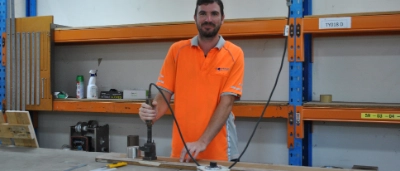
Injection mould tool design directly influences part consistency, production efficiency, and long-term manufacturing performance.
Dotmar provides injection tooling and moulding services with a practical focus on precision, durability, and manufacturability. From early design through to toolmaking, material selection, and ongoing maintenance, the approach is built around producing injection mould tools that perform consistently in real production environments.
Every project begins with understanding what the component needs to do, and building the right injection tooling around that outcome. A well-made injection mould tool reduces variation, supports repeatable output, and helps avoid unnecessary downtime over the life of the mould.
Injection Mould Tool Design
Good injection mould tooling design balances performance, reliability, and production efficiency.
Dotmar works closely with clients to understand component geometry, material requirements, production volumes, and operational constraints before tooling design begins. That early collaboration helps shape practical tooling solutions that align with both manufacturing requirements and commercial objectives.
Advanced CAD modelling and simulation software are used to validate designs before manufacture, ensuring tools are built right and built to last.
Injection Mould Tool Making
Precision in design needs to be matched by precision in build.
Dotmar’s injection mould toolmaking capability combines advanced machining equipment with skilled craftsmanship to transform tool design into reality. Tight tolerances, careful fabrication, and close process control ensure injection mould tools are manufactured with the accuracy required for consistent part production.
Rigorous quality checks verify dimensional accuracy, finish quality, and functional performance before tools are commissioned into production.
The result is injection tooling and moulding built for reliability, consistency, and long service life.
Injection Moulding Tool Materials
Injection moulding tool material selection has a direct impact on performance and longevity.
- Steel is widely used for high-volume production because of its strength, wear resistance, and long operational life.
- Aluminium offers faster machining, strong thermal conductivity, and cost advantages for lower-volume production or rapid tooling applications.
- Beryllium copper is often used in specific tool areas where superior heat transfer improves cooling efficiency and cycle performance.
The right choice depends on your component’s complexity, production volume, moulding material, and expected service life.
Dotmar’s expert technicians provide practical material guidance to help make informed decisions that balance durability, performance, and cost.
Injection Tooling Maintenance and Repair
Even a well-built injection mould tool needs ongoing care.
Regular maintenance protects dimensional accuracy, preserves finish quality, and helps identify wear before it becomes a production problem. Timely maintenance and repairs reduce downtime, maintain consistent output, and extend the lifespan of your tool.
Dotmar provides tooling maintenance and repair services with a focus on keeping production running reliably and protecting your injection mould tooling investment over the long term.
Why Choose Dotmar for Injection Tooling and Moulding?
- Extensive experience across engineering plastics and industrial manufacturing
- Precision-led tool design and build quality
- High-quality material selection guidance
- Advanced design validation and manufacturing technology
- Collaborative project support from concept through to production
- A commitment to delivering reliable results and customer success
Injection Tooling FAQs
1. What is the typical lead time for a new injection mould tool?
Lead time varies with complexity, but design, tooling manufacturing, and validation are typically planned across several weeks.
2. How long do injection moulding tools last?
With correct material selection and maintenance, quality tooling can support hundreds of thousands to millions of cycles.
3. What factors influence the cost of an injection mould tool?
Complexity, cavity count, material choice, finish requirements, and expected production volumes all affect tooling cost.
4. Can Dotmar handle complex, multi-cavity tool designs?
Yes. Multi-cavity and technically complex tooling can be designed to suit production efficiency and part requirements.
5. How does Dotmar ensure the quality and precision of its tools?
Through validated design, precision machining, controlled fabrication, and thorough inspection throughout the build process.
Talk to Dotmar
If you're planning to produce a moulded component, the right tooling matters.
Chat with Dotmar about your injection tooling requirements and partner with us for a solution built around performance, reliability, and practical manufacturing outcomes.