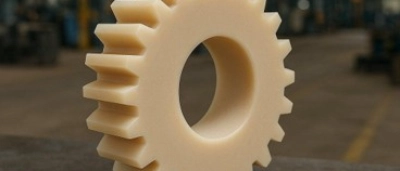
When your part or prototype demands strength, reliability, and design flexibility, Dotmar’s Selective Laser Sintering (SLS) is a standout choice. Our SLS 3D printing services in Melbourne produce durable, high-precision engineering plastic components ready for real-world use.
From functional prototypes to low-volume production, SLS allows you to manufacture faster and cheaper without compromising on quality.
What is Selective Laser Sintering (SLS) Technology
SLS is a powder-based 3D printing process that uses a high-powered laser to fuse material layer by layer into a solid object.
Unlike other 3D printing methods, SLS does not require support structures, allowing you to produce complex, interlocking, and internal geometries that would be difficult with FDM or SLA.
FDM is lower cost but limited in strength and finish. SLA offers high detail but less durability. Whereas SLS produces strong, functional parts with consistent mechanical properties, making it the preferred choice for engineering applications under stress.
When you need your part to handle mechanical loads, repeated use, and real-world environments, SLS is the way forward.
Dotmar's State-of-the-Art SLS Printers
Dotmar is invested in the future of manufacturing. Our state-of-the-art Selective Laser Sintering 3D printers in Melbourne enable high-performance parts to be produced in hours, not days, without compromising on quality or consistency.
Our systems are engineered for precision and repeatability, with key specifications including:
- Build Volume (W x D x H): 165 × 165 × 300 mm
- Layer Thickness: 110 microns
- Laser Type: Ytterbium Fiber, 30W
- Laser Spot Size: 200 microns
This level of control allows us to deliver accurate, durable components with excellent mechanical properties. Combined with a streamlined production workflow, our Melbourne SLS 3D printing service is designed to maximise efficiency, reduce material waste, and achieve a professional, ready-to-use finish.
With Dotmar’s high-performance SLS capability, you receive precision parts built for real-world applications.
Material Selection and Properties
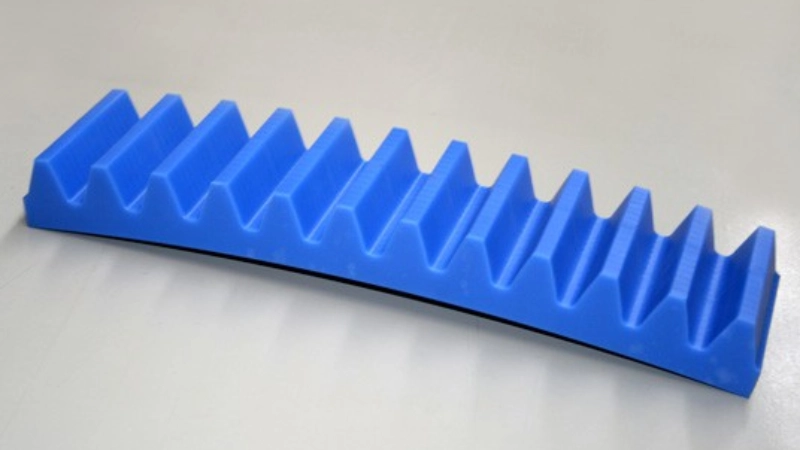 | Material selection directly impacts performance. Dotmar works with a range of engineering-grade polymers for SLS 3D printing suited to demanding environments.
Our team understands how each material behaves under load, heat, and environmental exposure, ensuring the right fit for your application. |
Design Optimisation for SLS Printing
Getting the most out of SLS 3D printing starts with the right design approach. Dotmar’s Melbourne technicians work closely with you to refine complex geometries and ensure each part is optimised for strength, accuracy, and manufacturability.
Using advanced build preparation and analysis software, we manage the full workflow, from 3D file optimisation and slicing through to build setup and nesting. This allows precise control over critical parameters such as energy input, scan strategy, layer thickness, and thermal behaviour within the build chamber.
For the end user, this level of control translates to consistent part quality, improved dimensional accuracy, and reliable mechanical performance.
Post-Processing and Finishing Options
Once printed, SLS parts can be professionally finished to meet both functional and visual requirements.
Dotmar offers:
- Surface smoothing and refinement
- Dyeing for consistent colour
- Protective coatings for added durability or chemical resistance
- Assembly and packaging for ready-to-use solutions
Every component is processed with consistency to ensure it meets specifications and performs as intended.
Selective Laser Sintering (SLS) Applications
SLS is widely used across industries where durability and precision are critical. For organisations looking for SLS 3D printing in Melbourne, it provides a practical pathway from concept through to functional production.
- Prototyping and product development: Engineering teams use SLS to produce functional prototypes that closely replicate final parts.
- Low-volume production: SLS is ideal for short production runs where traditional manufacturing isn’t cost-effective.
- Automotive and transport: SLS is commonly used to manufacture durable interior components, ducting, and under-the-hood parts.
- Aerospace and advanced engineering: Lightweight, complex geometries can be produced with high structural integrity.
- Medical and healthcare: SLS is used for custom components and anatomically designed prosthetics, including parts that may require sterilisation.
Why Choose Dotmar for SLS Printing?
At Dotmar, we focus on building long-term partnerships. Our engineers and experienced technicians work alongside you from initial concept through to prototyping and production, ensuring every stage is aligned with your performance requirements. With one of the largest ranges of engineering plastics and full machining capabilities, we offer a complete, end-to-end solution. This means better material selection, greater design flexibility, and consistent outcomes across your project. Backed by ISO 9001 certification, our processes are built around precision, quality control, and repeatability. The result is reliable, high-performance components delivered to specification, every time. | 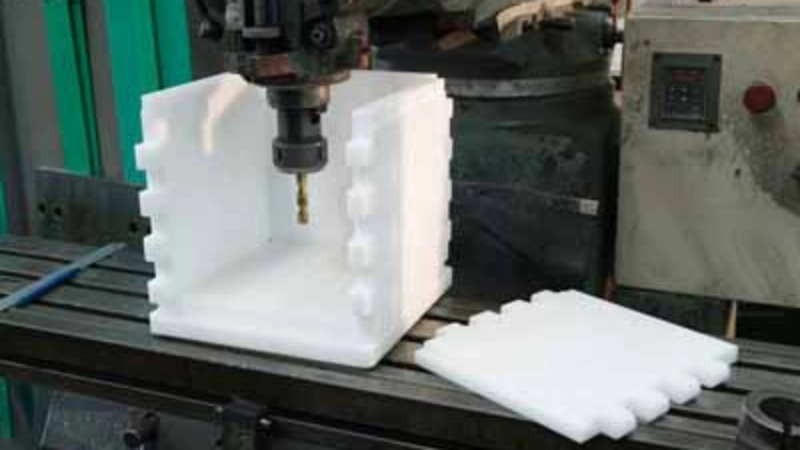 |
Frequently Asked Questions (FAQ)
1. What is selective laser sintering?
A 3D printing process that uses a laser to fuse powdered material into solid parts, layer by layer.
2. Which is better, SLS or SLA?
SLS is better for functional, durable parts. SLA is suited to high-detail, visual models.
3. What are the advantages and disadvantages of selective laser sintering?
SLS offers strong, complex parts without supports, but the surface finish can be slightly rough, and equipment costs are higher.
4. Is sintering better than melting?
Sintering allows controlled fusion without fully melting the material, resulting in strong, stable parts.
5. What materials are used for selective laser sintering?
Primarily, engineering plastics like nylon, polypropylene, and TPU.
6. What industries benefit most from SLS?
Automotive, aerospace, medical, and manufacturing sectors all benefit from SLS capabilities.
Get Started with SLS 3D Printing in Melbourne
If you need durable, high-precision parts, the technicians at Dotmar’s SLS 3D printing service in Melbourne are ready to support your project with tailored end-to-end solutions.
Contact our team to discuss your requirements. We’ll help you move from concept to production with confidence.